
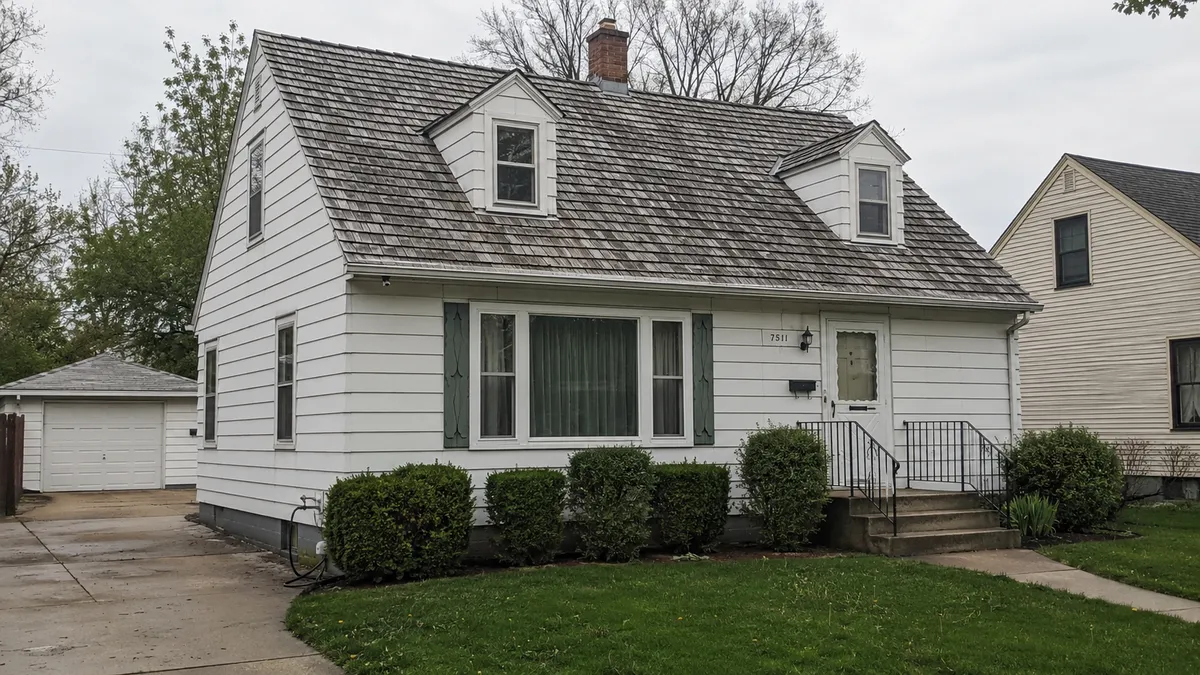
Cedar shake is one of the few roofing materials that can completely change the character of a house. It has a natural texture and depth that asphalt shingles cannot really duplicate, and it can look especially at home on Tudors, cottages, lake-area homes, and other architecture found throughout Milwaukee, Wauwatosa, Mequon, Whitefish Bay, and the surrounding area.
But cedar is not a low-maintenance version of asphalt. A cedar shake roof typically lasts about 25 to 30 years, costs substantially more to install, and needs more attention to moisture, debris, moss, damaged shakes, and ventilation. For the right homeowner and the right house, that tradeoff can absolutely be worth it. For someone who primarily wants the simplest, lowest-cost roof to own, it probably is not.
What Makes Cedar Shake Roofing Different?
Cedar is a natural wood roofing material.
Instead of creating a relatively uniform surface like asphalt shingles, individual shakes have variation in texture, thickness, and appearance. As the wood weathers, the roof gradually changes color and develops the gray or silver appearance commonly associated with older cedar roofs.
That visual character is a large part of why people choose it.
But being made from wood also means cedar interacts with moisture differently than asphalt, metal, or slate.
The roof has to be installed so that water can drain properly and the material can dry. Leaves, moss, shade, poor ventilation, and persistent moisture therefore matter more than they would on some other roofing materials.
The National Park Service specifically emphasizes keeping wood roofs free of debris and repairing damaged roofing, flashing, sheathing, and gutters as part of extending their service life.
The 5 Questions to Ask Before Choosing Cedar
1. Is the Look Important Enough to Justify the Cost?
This is really the first question.
If your only goal is keeping rain out of the house at the lowest reasonable replacement cost, asphalt shingles are hard to beat.
A typical asphalt shingle replacement runs roughly $8,500 to $18,000 for a Milwaukee-area home.
Premium materials such as cedar and slate can push a roof replacement into the $25,000 to $60,000+ range depending on the house, roofing material, roof complexity, and installation requirements.
That is a substantial difference.
What you are buying with cedar is not simply additional roof life. Cedar typically lasts around 25 to 30 years, which overlaps considerably with the 20 to 30 years expected from asphalt shingles.
You are primarily paying for a different material, a different installation, and a distinctive architectural appearance.
If you love that appearance and it fits the house, that may be completely reasonable.
If you are expecting cedar to save money because it lasts three times longer than asphalt, that is not the right reason to choose it.
2. Are You Willing to Maintain It?
Cedar is not a roof you should ignore for 20 years.
Wood naturally reacts to moisture and its surroundings, so keeping the roof clean and identifying problems early matters.
Watch for:
Leaves and needles collecting on the roof. Organic debris can hold moisture against the wood instead of allowing it to dry normally.
Moss and lichen. These can retain moisture and contribute to deterioration if allowed to become established.
Cracked or split shakes. Individual damaged pieces should be addressed before they allow water farther into the roofing system.
Loose or missing shakes. Storms, age, or physical damage can create isolated openings.
Flashing problems. Chimneys, valleys, dormers, vents, and roof-to-wall transitions still depend on properly functioning flashing regardless of how good the cedar itself looks.
The National Park Service recommends routine inspection of wooden roofs and specifically notes that moss and lichen can trap moisture and shorten roof life. It also cautions that aggressive pressure washing can damage wood roofing and force water underneath it.
In other words, “cleaning” a cedar roof incorrectly can create a different problem.
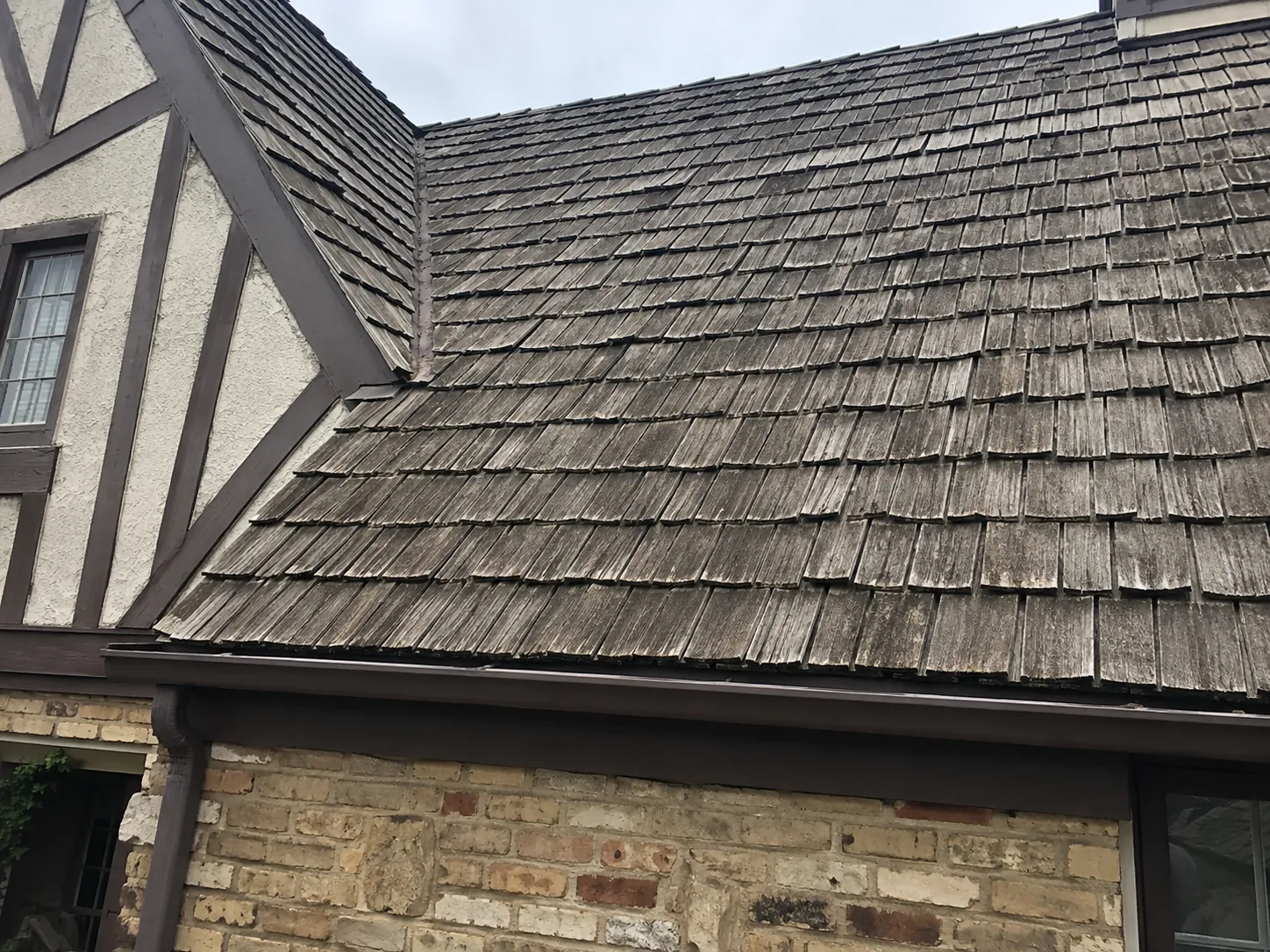 Cedar’s natural texture is a major reason homeowners choose it, but it needs more attention than asphalt.
3. How Much Shade and Tree Cover Does Your House Have?
A mature tree canopy can make a Milwaukee home beautiful.
It can also create a more challenging environment for cedar.
A roof section that receives good sunlight and airflow after rain has an opportunity to dry. A section that remains shaded beneath trees while holding leaves and organic debris may stay damp much longer.
That does not mean cedar cannot be installed on a wooded property.
It means the surrounding conditions become part of your maintenance plan.
Look at:
- Branches hanging directly over the roof
- Areas where leaves consistently collect
- Roof slopes that receive little direct sun
- Existing moss growth
- Gutters that fill frequently
- Dead or declining limbs capable of striking the roof
The Milwaukee area has also lost a significant share of its mature tree canopy to Emerald Ash Borer over the past decade. Dead and declining ash limbs remain a real roof-damage risk.
A falling branch can crack or break individual cedar shakes even without causing obvious structural damage.
4. Does the House Actually Suit Cedar?
Some roofing choices look good almost anywhere.
Cedar is more dependent on architecture.
It tends to make the most sense when the natural texture of the material complements the design of the house rather than fighting it.
That can include traditional homes, cottages, Tudors, homes with prominent rooflines, and properties where natural materials are already part of the exterior design.
It can also be particularly effective as an architectural accent rather than necessarily covering every roof surface.
On the right Milwaukee home, cedar can be one of the defining exterior features.
On another house, spending considerably more than asphalt may not produce the same visual payoff.
This is one reason material selection should happen in the context of the house rather than from a roofing sample sitting on a kitchen table.
5. Do You Want a Roof That Requires Specialized Repair?
A missing asphalt shingle is generally a common roofing repair.
Cedar requires more material-specific knowledge.
Individual shakes can often be replaced without removing the entire roof, which is good news. But the replacement needs to integrate properly with the surrounding roof rather than becoming a quick patch that traps water or creates another weak point.
The same applies to flashing.
A leak around a chimney does not automatically mean the cedar itself is failing. It may be a localized flashing problem that can be corrected while preserving the rest of the roof.
That is why the diagnosis matters.
A contractor evaluating an existing cedar roof should be able to tell you whether the problem is:
- Individual damaged shakes
- Widespread cedar deterioration
- Flashing failure
- Storm damage
- Poor drainage
- Moisture or ventilation problems
- An underlying roof-deck issue
“Your roof is old” is not enough information by itself.
One More Wisconsin Factor: Cedar Has to Be Able to Dry
Milwaukee weather gives cedar plenty of opportunities to get wet.
Spring rain.
Summer thunderstorms.
Fall leaves.
Winter snow.
Melting snow during a warmer afternoon.
Then freezing temperatures again overnight.
The issue is not simply that cedar gets wet. Roofing is supposed to handle weather.
The important part is whether the roof is able to shed that water and dry afterward.
A constantly shaded area covered in wet leaves creates a different environment from an open roof slope with good drainage and airflow.
This is one reason the National Park Service puts so much emphasis on keeping wood roofing free of leaves, branches, moss, and other moisture-holding material.
Ice Protection Still Matters
Wisconsin’s cold climate also affects what goes beneath a wood roof.
State requirements include ice-dam protection for shingled or shake roofs over heated areas when the roof slope is 4:12 or less. That protection must extend at least 30 inches up the roof slope from the edge and at least 12 inches beyond the interior face of the exterior wall (Wisconsin DSPS, SPS 321.28).
You will never see that membrane once the roof is finished.
That does not make it unimportant.
With any premium roofing material, the parts underneath and around the visible roof matter just as much as the material you chose because tearing the roof apart later to fix an installation problem is expensive.
Cedar vs. Asphalt vs. Metal: Which Makes More Sense?
If you are choosing a new roof rather than preserving an existing cedar roof, it helps to compare the three materials based on what you actually get.
| Material | Typical Cost | Typical Lifespan | Best Fit |
|---|---|---|---|
| Asphalt shingles | $8,500 to $18,000 | 20 to 30 years | Homeowners prioritizing cost and simplicity |
| Cedar shake | Premium range, often $25,000 to $60,000+ depending on project | 25 to 30 years | Homeowners prioritizing natural appearance and architectural character |
| Metal | $22,000 to $37,500 | 40 to 70 years | Homeowners prioritizing long service life |
Choose Asphalt If:
You want a straightforward roofing system at the lowest typical replacement cost.
There is nothing wrong with that choice. Asphalt shingles are popular precisely because they provide a practical balance of cost, performance, availability, and appearance.
Choose Cedar If:
The appearance of natural wood is genuinely important to you, it fits the architecture of your house, and you are comfortable with the additional maintenance and cost.
Cedar is much easier to justify when you want cedar specifically, rather than simply wanting an upgrade from asphalt.
Choose Metal If:
Your biggest concern is extending the time before another complete replacement.
Metal costs substantially more upfront than asphalt, but its typical 40 to 70 year lifespan gives it a longevity advantage that cedar does not necessarily provide.
For a deeper breakdown of those numbers, see how much a new roof costs in our full pricing guide.
What if Your Milwaukee Home Already Has Cedar?
The calculation changes if you already own the roof.
Do not assume that because cedar requires maintenance, you should tear it off the first time something goes wrong.
Individual shakes can deteriorate or become damaged while large portions of the roof remain serviceable.
Look for:
- Isolated cracked or missing shakes
- Splitting
- Moss or organic buildup
- Loose pieces
- Water staining inside the attic
- Damage around chimneys or valleys
- Sections that appear substantially more weathered than others
A few problem areas may point toward roof repair rather than full replacement.
Widespread deterioration across multiple slopes is a different situation.
If shakes are failing throughout the roof, repeated leaks are developing in unrelated areas, or the wood has broadly deteriorated, replacement becomes more reasonable.
The National Park Service recommends regular maintenance and selective replacement of damaged wood shingles where appropriate, noting that timely repairs can add years of service to the roof.
The goal is not to preserve every piece of cedar forever.
It is to avoid replacing a functioning roof because a repairable portion needs attention.
Do Not Pressure Wash a Cedar Roof Just to Make It Look New
This deserves its own warning because weathered cedar does not look like new cedar.
That is normal.
As the wood ages, its appearance changes. Trying to blast away years of weathering with a high-pressure washer can damage the roof.
The National Park Service specifically cautions against power washing wooden roofing because high pressure may crack or otherwise damage the material and can force significant amounts of water underneath the shingles.
If moss or organic growth needs to be addressed, the objective should be protecting the roof, not making 15-year-old cedar look like it arrived from the lumber yard yesterday.
A cosmetically newer-looking roof is not an improvement if the cleaning process shortens its life.
When Cedar Shake Is Probably Not the Right Choice
Cedar is a specialized material, and there are perfectly reasonable reasons not to choose it.
It probably is not your best option if:
Budget is the primary consideration. Asphalt is substantially less expensive.
You want minimal maintenance. Cedar benefits from routine attention to debris, vegetation, individual damage, and moisture conditions.
Longevity is your main reason for spending more. Metal offers a much larger lifespan advantage over asphalt.
You do not particularly care about the cedar appearance. Most of the justification disappears if the look itself is not valuable to you.
The house sits in a difficult environment for wood roofing. Heavy shade, persistent debris, and surrounding tree conditions may make maintenance more involved.
None of those points means cedar is a bad material.
They mean cedar solves a particular problem.
It gives you a natural roofing material with architectural character that asphalt and metal do not reproduce in quite the same way.
If that is not what you are looking for, there are easier ways to roof the house.
Cedar Makes Sense When You Want What Cedar Actually Offers
So, is cedar shake roofing right for your Milwaukee home?
If you want the least expensive roof, probably not.
If you want the longest-lasting roof available for the money, probably not.
If you want a natural roofing material with a distinctive appearance, your house is well suited to it, and you are willing to maintain it properly, cedar becomes much more compelling.
Expect roughly 25 to 30 years of service life and a substantially higher initial cost than ordinary asphalt shingles. Keep the roof clear of debris, pay attention to moss and moisture, repair individual damaged shakes promptly, and have flashing and other roof details inspected along with the wood itself.
Most importantly, decide based on what you value.
Cedar is not simply an expensive version of an asphalt roof. It is a different roofing choice with a different appearance, ownership experience, and maintenance requirement.
For the right Milwaukee home, that difference is exactly the point.
Milwaukee Roof Contractors provides roof inspection, roof repair, and roof replacement throughout Milwaukee, Waukesha, and Ozaukee Counties, including Wauwatosa, West Allis, Mequon, Whitefish Bay, Glendale, Shorewood, Menomonee Falls, Cedarburg, Grafton, Brookfield, New Berlin, and surrounding communities. If you are considering cedar shake for a new roof or want to know whether an existing cedar roof should be repaired or replaced, contact us to have the roof and your options evaluated.