
Roof Replacement in Milwaukee Metro
Not every roof problem needs a full replacement, but when a roof is past its realistic service life or storm damage exceeds what repair can reasonably fix, replacement is the more honest recommendation. We walk through material options and real costs before you commit to either.
📞 (414) 555-0100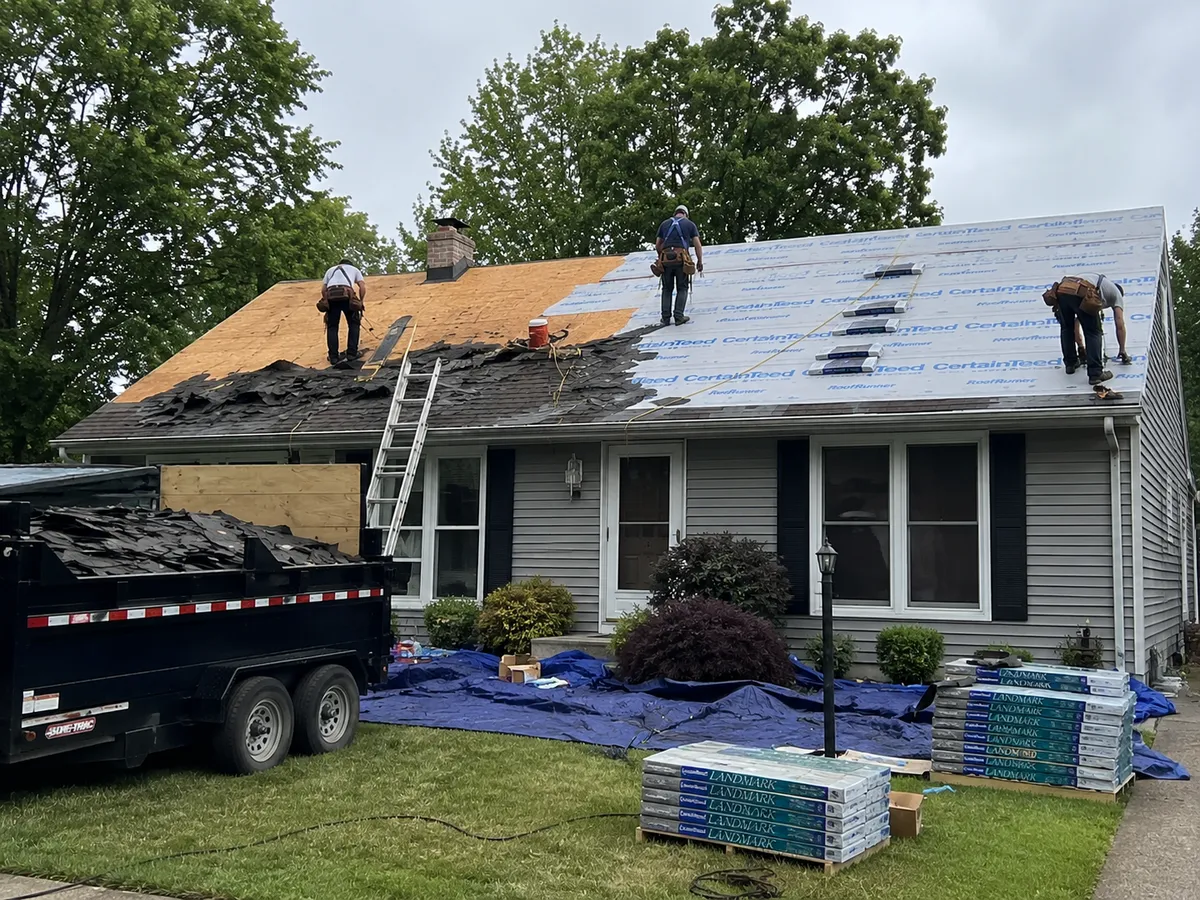
When Does Roof Replacement Make More Sense Than Repair?
A few signs point toward replacement over another round of repairs:
- Wear spread across the whole roof rather than isolated spots
- Multiple layers of prior roofing already built up, since most codes cap how many layers can be re-covered before a full tear-off is required
- A roof that's simply past its material's realistic service life
If storm damage is isolated to one section of an otherwise sound roof, repair is usually still the better call. We'll say so honestly rather than push a bigger job.
The goal is to figure out whether another repair still makes financial sense or whether you're putting more money into a roof that is already at the end of its useful life.
Material Options and Realistic Lifespans
There isn't one roofing material that makes sense for every home. We price out options based on your actual roof, not a single default recommendation.
How Long Do Asphalt Shingles Last?
Asphalt shingles are the most common choice and typically last 20 to 30 years.
For homeowners comparing replacement options, asphalt gives you a straightforward baseline against which the longer-lasting materials can be compared.
How Long Does a Metal Roof Last?
Metal roofing runs 40 to 70 years and sheds Wisconsin snow load well.
It has a substantially different lifespan and cost profile than asphalt, so we price it separately based on the actual roof rather than treating it as an interchangeable upgrade.
How Long Does Cedar Shake Roofing Last?
Cedar shake generally lasts 25 to 30 years with proper maintenance.
Like the other material options, the actual replacement price depends on the size and complexity of the roof rather than the material alone.
How Long Does a Slate Roof Last?
Slate, more common on Milwaukee's older east side homes, can last 75 to 100 years or more but costs significantly more in labor.
That longer service life is one reason it needs to be evaluated differently from a standard asphalt replacement rather than priced using the same assumptions.
How Much Does Roof Replacement Cost in Milwaukee?
Roof replacement cost depends on the material, the size of the roof, and the labor involved in actually completing the tear-off and installation. Typical project ranges include:
- Standard asphalt shingle roof: $8,500 to $18,000 for a typical 1,800 to 2,200 square foot home
- Metal roofing: $22,000 to $37,500 for a full replacement
- Premium materials like cedar shake or slate: $25,000 to $60,000 or more depending on size and roof complexity
We provide a firm quote after measuring the actual roof rather than applying one standard price to every house.
What Affects the Price of a Roof Replacement?
Two homes with similar square footage do not necessarily require the same amount of roofing work. The quote can change based on factors already present on the roof, including:
- Roof pitch
- Existing roofing layers
- Access
- Material choice
- Roof size and complexity
Those conditions affect labor cost, which is why we measure the actual roof before providing a firm number. A replacement involving asphalt shingles is also priced very differently from one using metal, cedar shake, or slate, so the realistic way to compare those choices is to price them against the same actual roof.
Do You Need a Permit for Roof Replacement in Milwaukee?
Yes. A full re-roof requires a permit through the City of Milwaukee, filed as part of the city's re-roofing permit process.
The contractor performing the work also needs to hold the state certifications required to pull that permit, specifically Wisconsin Dwelling Contractor and Dwelling Contractor Qualifier certification. That's worth confirming before the project begins rather than assuming any roofing company can handle the permitting.
Should Ventilation and Insulation Be Addressed During Roof Replacement?
Roof replacement is also the natural time to correct attic ventilation and insulation gaps, since the deck is already exposed. That can include bringing soffit and ridge ventilation into balance and hitting the state's R-49 attic insulation minimum during the replacement.
Doing that work during a replacement is far cheaper than doing it as a separate project later. If there are known ventilation or insulation gaps, this gives you an opportunity to address those issues while the roof system is already being opened up rather than treating them as an unrelated project afterward.
Related reading: How Much Does a New Roof Cost in Milwaukee?
Schedule Roof Replacement
Call our local team for a free consultation.
Roof Replacement Service Areas
Roof Replacement Questions, Answered
How long does a full roof replacement take?
Most standard asphalt shingle replacements complete in one to three days, weather permitting. Steeper roofs, larger homes, or specialty materials like slate or cedar take longer.
Can you replace my roof in winter?
It's possible but has real limits. Shingle adhesive strips need enough warmth to seal properly, so cold-weather installs sometimes need hand-sealing or a delayed timeline. We'll be upfront if your timing means a partial delay makes more sense than a rushed job.
Do I need to be home during replacement?
Not for the whole job, but we'll coordinate access and walk the finished roof with you before final payment.
What happens to my old roofing material?
We remove and haul away the old roofing as part of the job. A dumpster or trailer is typically staged on site for the duration of the tear-off.
Is a new roof replacement covered by a warranty?
Warranty coverage is available on qualifying replacement work. Terms depend on the material and manufacturer, and we walk through what's covered as part of the estimate before you commit to a material or contractor.
How do I know if I should repair or replace my roof?
Replacement generally makes more sense when wear is spread across the whole roof, multiple layers of prior roofing are already built up, or the roof is past its material's realistic service life. If storm damage is isolated to one section of an otherwise sound roof, repair is usually still the better call.
How long should a new roof last?
It depends on the material. Asphalt shingles typically last 20 to 30 years, metal roofing runs 40 to 70 years, cedar shake generally lasts 25 to 30 years with proper maintenance, and slate can last 75 to 100 years or more.
How much does a new roof cost in Milwaukee?
Most Wisconsin homeowners spend between $8,500 and $18,000 to replace a standard asphalt shingle roof on a typical 1,800 to 2,200 square foot home. Metal roofing installations commonly run $22,000 to $37,500 for a full replacement. Premium materials like cedar shake or slate can push a project to $25,000 to $60,000 or more depending on size and roof complexity.