
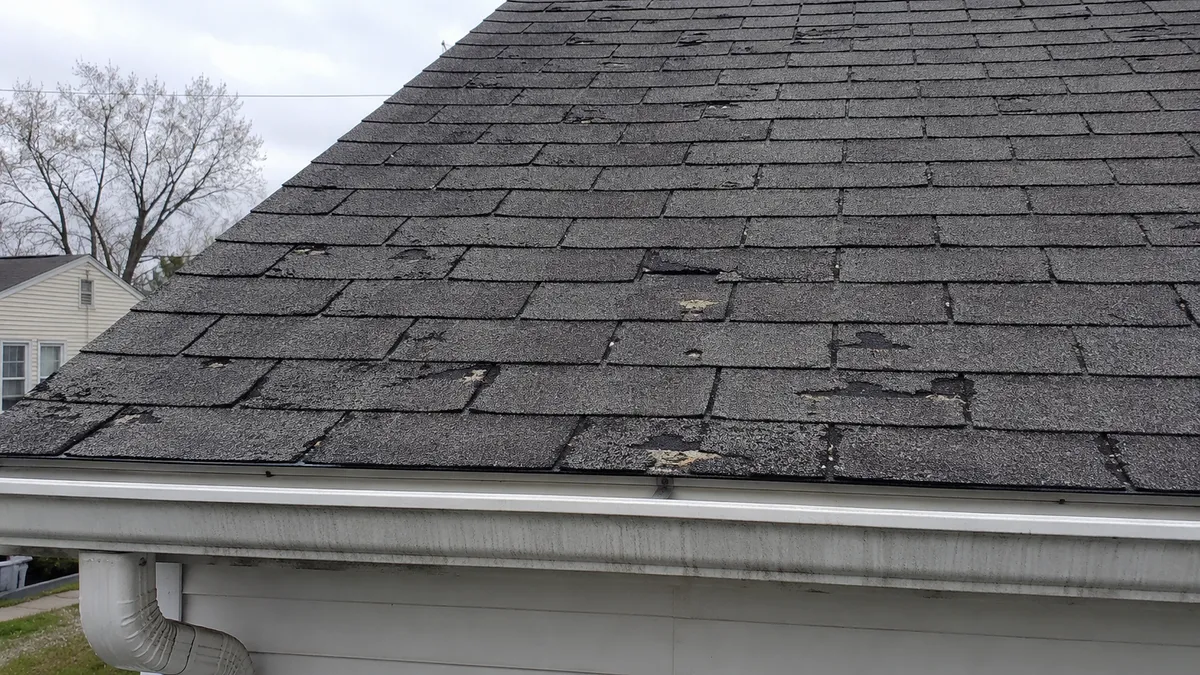
If you have an asphalt shingle roof in Milwaukee, a reasonable starting point is 20 to 30 years. But the number stamped on a roofing brochure is not the same thing as the number of years your roof will actually protect your house. Two roofs installed the same year can age very differently depending on attic ventilation, storm exposure, ice buildup, tree cover, flashing details, and whether small problems were repaired before they spread.
That matters in Milwaukee because roofs here deal with almost every condition that shortens roofing life: snow, ice, freeze-thaw cycles, summer heat, thunderstorms, wind, hail, and falling limbs. If your roof is approaching the back half of its expected lifespan, knowing what material you have and what condition it is actually in will tell you much more than age alone.
How Long Each Roofing Material Typically Lasts
The biggest factor is what your roof is made of.
| Roofing Material | Typical Lifespan |
|---|---|
| Asphalt shingles | 20 to 30 years |
| Cedar shake | 25 to 30 years |
| Metal roofing | 40 to 70 years |
| Slate | 75 to 100+ years |
Most Milwaukee-area homeowners have asphalt shingles, so the 20 to 30 year range is the one that matters most often. That does not mean every asphalt roof automatically reaches 30 years.
Asphalt Shingles: 20 to 30 Years
Asphalt shingles are the standard residential roofing material throughout Milwaukee, Wauwatosa, West Allis, Brookfield, New Berlin, and much of the surrounding metro.
A properly installed asphalt roof with good attic ventilation and no major storm damage can provide decades of service. But once the roof gets into its late teens or twenties, you should start paying closer attention to condition.
Age 0 to 10 years. Major age-related deterioration would be unusual. Problems during this period are more likely to involve installation details, flashing, storm damage, or isolated defects.
Age 10 to 20 years. Condition becomes more important. You may begin seeing localized shingle wear, flashing issues, storm damage, or maintenance needs.
Age 20 to 30 years. Replacement planning becomes increasingly reasonable, particularly if multiple areas of the roof are showing wear.
There is no automatic birthday when a roof fails. A 22-year-old roof in good condition may still have useful life. A much younger roof that has been repeatedly hit by hail, poorly ventilated, or damaged by falling branches may need significant work sooner.
Metal Roofing: 40 to 70 Years
A properly installed metal roof can substantially outlast asphalt, with a typical lifespan of 40 to 70 years.
Metal also comes with a substantially higher upfront cost. A typical metal roof replacement can run roughly $22,000 to $37,500, compared with around $8,500 to $18,000 for asphalt shingles on a typical home.
Whether the longer lifespan justifies the added cost depends on the house, how long you expect to own it, and what you want from the roof.
Cedar Shake: 25 to 30 Years
Cedar shake roofs typically last about 25 to 30 years.
They can be beautiful, particularly on homes where the architecture calls for a more traditional material, but cedar requires more attention than ordinary asphalt shingles. Moisture exposure, organic growth, splitting, and individual damaged shakes all matter.
Premium roofing materials such as cedar can also push a replacement well above standard asphalt pricing.
Slate: 75 to 100+ Years
Slate is in a different category. A quality slate roof can last 75 to 100 years or longer.
That matters in Milwaukee because slate still appears on some of the city’s older housing stock, particularly on the East Side and other neighborhoods with historic homes.
The roof itself may have enormous remaining life even when individual pieces need repair. Slate repair commonly starts around $500 or more, so you generally do not want someone treating a slate problem the same way they would treat a damaged asphalt shingle.
What Actually Shortens a Roof’s Life in Milwaukee
Material tells you the theoretical lifespan. Conditions tell you how close your roof gets to it.
1. Poor Attic Ventilation
Your roofing system is more than the shingles you can see from the street.
Heat and moisture moving through the attic can affect the roof deck and roofing materials above it, which is one reason Wisconsin’s building code requires balanced soffit intake and ridge exhaust ventilation (Wisconsin DSPS, SPS 322.39) rather than leaving airflow to chance.
Soffit intake brings outside air into the attic. Ridge exhaust gives warmer, moisture-laden air somewhere to escape.
If one side of that system is blocked or inadequate, simply having roof vents does not necessarily mean the attic is ventilating correctly.
2. Insufficient Attic Insulation
Ventilation and insulation solve different parts of the same Wisconsin problem. During winter, insufficient insulation allows more heat from the living space to move toward the roof, which can contribute to uneven roof temperatures and snowmelt. That’s why the Wisconsin Energy Code sets a minimum R-49 attic insulation requirement for Climate Zone 6, which includes the Milwaukee metro.
You may therefore have a roofing problem that starts inside the attic rather than on top of the shingles.
3. Ice and Water Exposure at the Eaves
The lower edge of a roof takes a beating during a Wisconsin winter.
Snow melts, water moves toward the colder roof edge, temperatures fall again, and ice can accumulate along the eaves. If water gets beneath the shingles, the vulnerable area is exactly where you do not want ordinary roofing underlayment to be your only protection.
Wisconsin code requires an ice-and-water-shield membrane on asphalt shingle roofs with a 4:12 slope or shallower over heated space, extending at least 30 inches up from the roof edge and 12 inches past the interior wall face (Wisconsin DSPS, SPS 321.28).
That membrane is backup protection. It does not make ice buildup harmless, but it provides another barrier between water and the roof deck.
4. Wind and Hail
A roof does not need to look destroyed from the driveway to have storm damage.
Wind can lift or loosen shingles and damage flashing. Hail can damage the shingle surface without creating an immediate indoor leak. Sometimes the first homeowner-visible symptom is water intrusion months later.
That is why the age of your roof should always be considered together with its storm history.
If a major storm moved through your neighborhood and nearby houses are getting roofing work, that is a reasonable time to have your roof inspected even if you do not see water inside.
5. Falling Trees and Limbs
Milwaukee has another increasingly relevant roof hazard: trees.
The region lost a significant portion of its mature tree canopy to Emerald Ash Borer over the past decade. Dead and declining ash trees can shed large limbs, particularly during wind, snow, or storms.
Even a branch that does not puncture the roof can break shingles, damage gutters, loosen flashing, or create a weak area that starts leaking later.
If you have mature trees extending over the house, roof condition and tree condition should both be part of your maintenance routine.
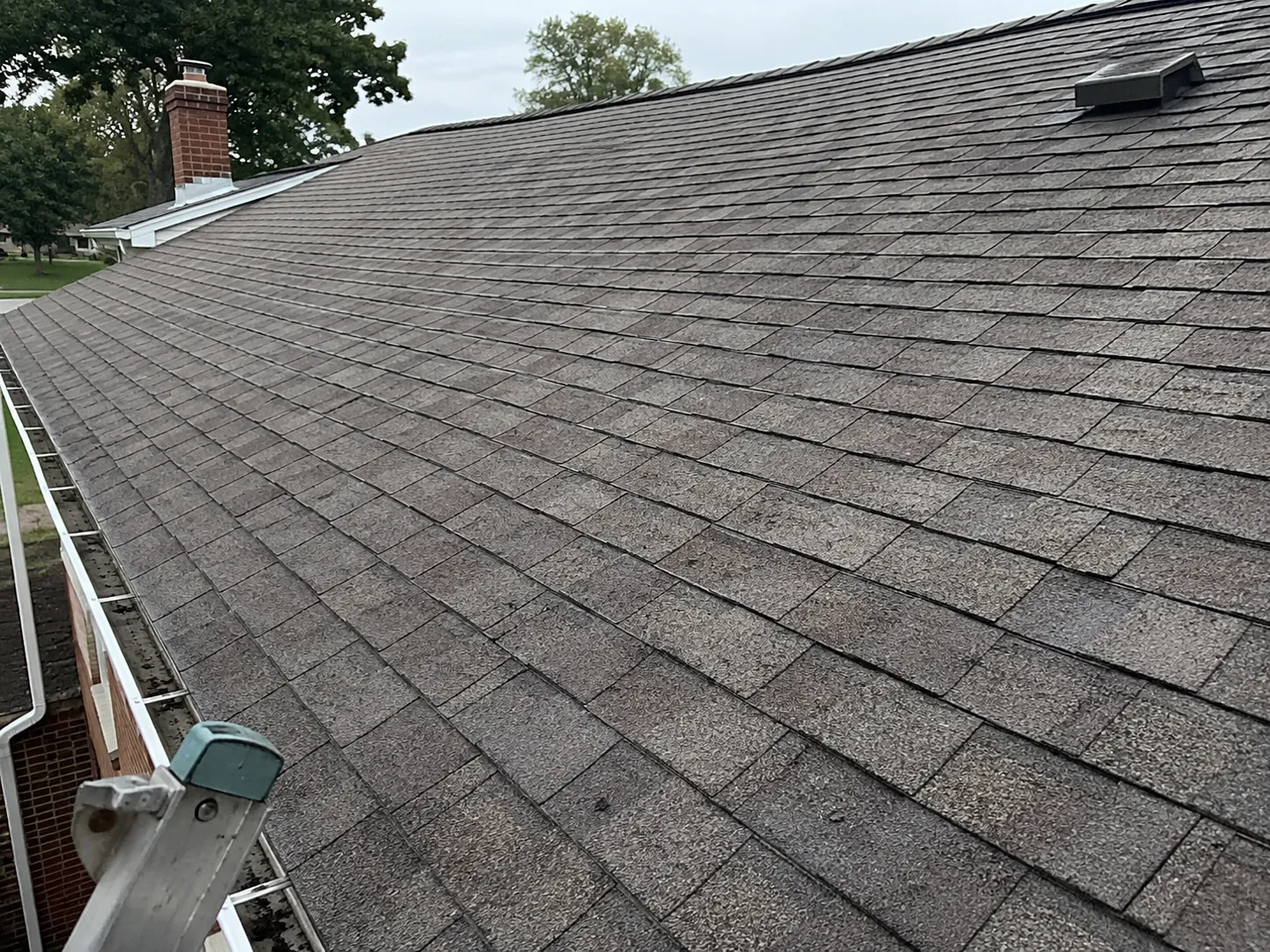 A thorough inspection catches small problems before they become expensive repairs.
One More Wisconsin Factor: The Roof and Attic Have to Work Together
This is the Milwaukee-specific part of roof lifespan that homeowners often miss.
You can install good shingles and still create problems if the attic underneath them is not functioning correctly.
In winter, heat escaping from the house can warm portions of the roof while the eaves remain below freezing. Snow melts on the warmer section, runs toward the edge, and can refreeze.
Meanwhile, moisture generated inside the home can move into the attic. Without adequate ventilation, that moisture has fewer opportunities to escape.
That is why a roofing contractor looking at premature shingle deterioration, winter leaking, frost inside an attic, or recurring ice problems should not automatically stop at the shingles.
Check the ventilation. Are soffit intake paths open? Is exhaust ventilation actually functioning?
Check insulation. Is the attic insulated appropriately for Wisconsin’s Climate Zone 6 requirements?
Check the roof deck. Are there signs of moisture damage, staining, or deterioration?
Check the eaves and valleys. These are common areas for water and ice to concentrate.
Replacing shingles without identifying an underlying attic problem can leave the conditions that contributed to the first roof’s deterioration in place.
Does an Old Roof Need to Be Replaced, or Can It Be Repaired?
Age should influence the decision, but it should not make the decision by itself.
A localized problem on a roof that is otherwise in good condition is often a repair question. Widespread deterioration on an older roof is more likely to become a replacement question.
Repair Makes More Sense When the Problem Is Localized
Examples include:
- A small area of missing or damaged shingles
- Damaged flashing around a penetration
- An isolated leak with a clear source
- Minor storm damage limited to one section
- Individual damaged slate pieces
Typical repair pricing varies by material and scope. Flashing repair commonly runs around $10 to $20 per linear foot, while an asphalt shingle patch averages around $250. Slate repair commonly starts at $500 or more.
If the rest of the roof still has substantial usable life, fixing the specific failure can be the practical move.
Replacement Makes More Sense When Problems Are Widespread
Replacement becomes more reasonable when you are repairing one section only to discover another failing section shortly afterward.
Signs that point more toward replacement include widespread shingle deterioration, repeated leaks in unrelated areas, extensive storm damage, deteriorated roof decking, or an asphalt roof that is already near the end of its expected 20 to 30 year lifespan.
A typical asphalt roof replacement generally falls around $8,500 to $18,000, while metal can run around $22,000 to $37,500 and premium materials such as cedar or slate can reach $25,000 to $60,000 or more.
Those numbers are exactly why determining whether you actually need replacement matters. You do not want to spend thousands repeatedly patching a roof that is failing systemically, but you also do not want to replace a functional roof because one flashing detail needs repair.
Storm Damage Can Change the Timeline Quickly
A 15-year-old roof might appear to have plenty of theoretical life remaining until a major hail or wind event moves through Milwaukee.
If you suspect storm damage, do not assume you can revisit the insurance question whenever you get around to replacing the roof.
Wisconsin law establishes a one-year deadline to file suit on a property insurance claim involving wind, hail, or fire damage. An insurer must acknowledge a claim within 10 days, and simply continuing to negotiate with an adjuster does not pause the one-year clock. A formal appraisal or arbitration process can pause it (Wis. Stat. § 631.83).
That does not mean every storm-damaged roof becomes an insurance dispute. It means you should document potential damage and deal with it promptly rather than assuming the claim timeline will remain open indefinitely.
After significant storms, also be careful with contractors who suddenly appear in the neighborhood offering immediate roof replacement.
Out-of-state “storm chaser” contractors commonly move into areas after major hail and wind events. Before signing anything, verify that the contractor has a genuine local presence and the credentials needed to perform permitted residential roofing work in Wisconsin.
Contractors must hold Wisconsin Dwelling Contractor (DC) and Dwelling Contractor Qualifier (DCQ) certification to pull permits.
Does Roof Replacement Require a Permit in Milwaukee?
A full re-roof in the City of Milwaukee requires a permit.
Straightforward repair using the same roofing materials generally does not.
That distinction matters if you are deciding between replacing one damaged area and removing and replacing the full roofing system.
For a full re-roof, proper permitting also gives you another reason to confirm that the contractor you hire is appropriately credentialed before work begins.
If someone is proposing a complete roof replacement but seems vague about permits, licensing, or who will actually pull the permit, ask those questions before signing a contract.
How to Get the Most Life Out of the Roof You Already Have
You cannot stop Wisconsin weather, but you can keep small problems from becoming roof-ending problems.
Inspect after major storms. You do not need to climb onto the roof yourself. Look for missing shingles, debris, fallen limbs, damaged gutters, or new staining inside the attic or ceilings.
Pay attention to flashing. Roof penetrations, chimneys, walls, valleys, and transitions are common water-entry points. A small flashing repair is much cheaper than replacing water-damaged decking later.
Keep gutters and drainage paths clear. Water should move off the roof and away from the structure instead of collecting at edges or backing up beneath roofing materials.
Watch your trees. Dead or declining branches hanging over the roof are easier to deal with before a storm puts them through the shingles.
Look inside the attic occasionally. Water staining, damp roof decking, visible frost, or unexpected moisture can reveal problems before they reach a finished ceiling.
Do not judge the roof only from the ground. Shingles can look reasonably normal from the driveway while flashing, sealant, vents, valleys, or storm-damaged areas need attention.
The Number on the Shingle Package Is Only the Starting Point
So, how long does a roof last in Milwaukee?
For most homeowners with asphalt shingles, 20 to 30 years is the useful planning range. Cedar is typically around 25 to 30 years, metal around 40 to 70 years, and slate can last 75 to 100 years or more.
But your roof’s actual lifespan is determined by more than material. Milwaukee winters, summer storms, attic ventilation, insulation, ice exposure, tree damage, installation quality, and maintenance all influence whether you reach the upper end of that range.
If your roof is 20 years old and performing well, age alone does not mean it needs to come off tomorrow. If it is 12 years old but has widespread hail damage, moisture problems, or recurring leaks, the calendar does not guarantee another decade either.
The better question is not simply, “How old is my roof?”
It is, “Given its age, material, condition, attic, and damage history, how much useful life does this roof realistically have left?”
Milwaukee Roof Contractors provides roof inspections, roof repair, roof replacement, emergency roof repair, and storm and hail damage repair throughout Milwaukee, Waukesha, and Ozaukee Counties, including Wauwatosa, West Allis, Mequon, Whitefish Bay, Glendale, Shorewood, Menomonee Falls, Cedarburg, Grafton, Brookfield, New Berlin, and surrounding communities. If you are unsure whether your roof needs a repair now or you simply want to know how much life it has left, contact us to have it evaluated.