
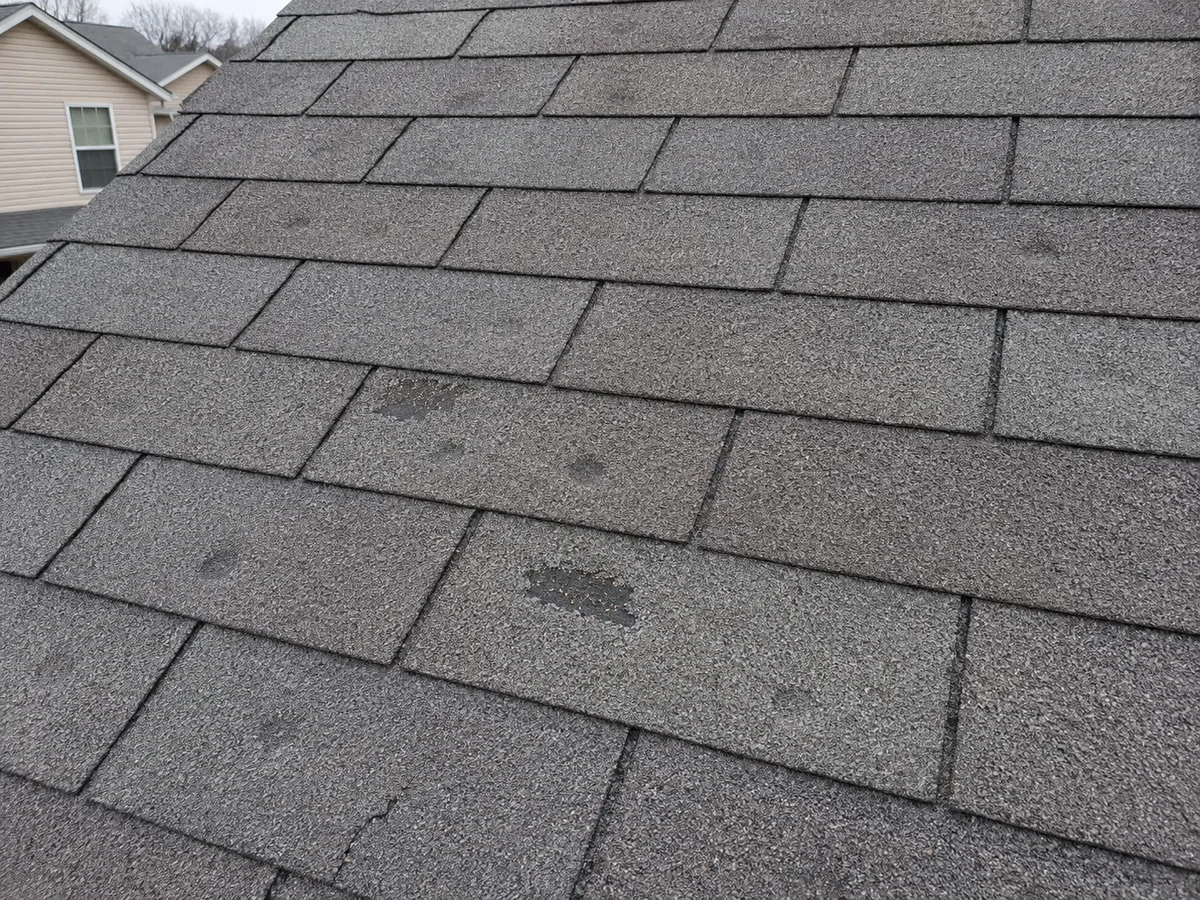
A tree limb crashes onto your roof during a thunderstorm. Hail tears up the shingles. Wind lifts an entire section along the ridge. Those are the kinds of roof problems homeowners insurance is designed to address. A 25-year-old roof that has simply worn out is a different story.
For Milwaukee homeowners, the most important question is usually not, “Does insurance cover roofs?” It is what caused the damage? Homeowners insurance generally responds to sudden damage caused by a covered event, while normal aging, deterioration, and maintenance remain the homeowner’s responsibility. Your specific policy ultimately controls, but understanding that distinction will tell you whether you are probably looking at an insurance claim or a repair bill you need to handle yourself.
The Short Answer: Insurance Covers Damage, Not an Old Roof
Your homeowners policy does not function like a roof replacement plan.
If a covered storm damages an otherwise functioning roof, insurance may pay to repair or replace the damaged portion, subject to your deductible and the terms of your policy. Wisconsin’s Office of the Commissioner of Insurance makes the distinction plainly: if a roof needs replacement because of a storm or another covered loss, the insurer must pay for the cost to repair or replace the damaged portion, minus the deductible. If the roof is simply worn out, replacing it is the homeowner’s responsibility.
That means two roofs of exactly the same age can produce very different insurance outcomes.
Roof A: A 12-year-old asphalt roof has shingles torn off during a windstorm and water enters the attic.
Roof B: A 25-year-old asphalt roof has widespread granule loss, brittle shingles, deteriorated flashing, and several slow leaks with no identifiable storm event.
Roof A has a clear sudden cause that may be covered. Roof B looks much more like age and deterioration.
The fact that a roof needs replacement does not by itself make the replacement an insurance claim.
Roof Damage That Homeowners Insurance Commonly Covers
The exact list of covered causes is in your policy, but several types of sudden roof damage commonly lead Milwaukee homeowners to file claims.
1. Wind Damage
High wind can lift shingles, tear shingles completely off the roof, loosen flashing, damage ridge caps, or expose the roofing materials underneath.
Sometimes wind damage is obvious. You find shingles in the yard after a storm and can see an exposed section from the driveway.
Sometimes it is less obvious. A shingle can lift enough to break its seal without disappearing completely. The roof may still look intact from the ground, but its ability to keep out wind-driven rain has been compromised.
If strong winds moved through Milwaukee, Wauwatosa, West Allis, Waukesha, or another nearby community and you notice missing shingles or a new leak afterward, document what you see and consider having the roof professionally inspected. Our storm and hail damage repair service covers exactly this kind of assessment and repair.
2. Hail Damage
Hail can damage asphalt shingles without putting a visible hole through the roof.
Impacts can damage the shingle surface, dislodge protective granules, crack materials, and reduce the roof covering’s ability to perform over time. The Insurance Institute for Business & Home Safety specifically identifies roof coverings as vulnerable to hail and notes that hail damage can shorten a roof’s service life.
This is why standing in the driveway after a storm is not always enough to determine whether the roof was damaged.
Other clues around the property can help establish that hail actually occurred. Damaged gutters, downspouts, siding, vents, screens, outdoor equipment, or vehicles may all be reasons to take a closer look at the roof.
Do not intentionally create or exaggerate damage in an attempt to support an insurance claim. A legitimate inspection should document what is actually there.
3. Fallen Trees and Branches
If wind brings down a tree or large branch and it damages your roof, your own homeowners policy will generally be the first place to look for coverage.
That can be true even if the tree belonged to your neighbor. The Wisconsin Office of the Commissioner of Insurance explains that the tree’s owner is generally responsible only when negligence can be established.
For Milwaukee-area homeowners, tree damage deserves particular attention. The region lost a large share of its mature ash canopy to Emerald Ash Borer over the past decade, leaving dead and declining limbs as a continuing property-damage concern.
A limb does not need to punch through the roof to cause damage. It can crack shingles, damage flashing, bend gutters, break roof decking, or leave a vulnerable area that leaks during the next rain.
If a tree has created an opening in the roof, preventing additional water intrusion becomes the immediate priority. That’s exactly what emergency roof repair is for.
4. Fire Damage
A house fire can obviously damage far more than the shingles.
Heat and flames may affect roof coverings, decking, framing, insulation, ventilation components, flashing, and other parts of the roofing system.
Where fire is a covered cause under the policy, roof damage resulting from that event may be part of the larger property claim.
The important distinction remains the same. The insurer is evaluating damage caused by the covered event, not paying simply because roofing materials happened to be old when the event occurred.
What Homeowners Insurance Usually Does Not Pay For
This is where many roof claims become confusing.
A roof can absolutely need work without the problem being covered by insurance.
Normal Wear and Aging
Asphalt shingles commonly last around 20 to 30 years. They do not remain new for that entire period.
Over time, shingles lose granules, materials become more brittle, sealant and flashing age, and the roofing system gradually reaches the end of its useful life.
Insurance generally does not pay to replace a roof simply because it is old.
If your 25-year-old roof is worn out and leaking because the materials have deteriorated, that is normally a maintenance and replacement issue rather than a covered insurance loss. (For a closer look at how long different roofing materials actually last, see our guide to how long a roof lasts in Milwaukee.)
Deferred Maintenance
A minor roofing problem can become a major one if ignored.
Suppose flashing around a chimney has been leaking slowly for years and eventually the surrounding roof deck rots. The fact that the repair is now expensive does not automatically transform long-term deterioration into sudden storm damage.
Insurance is designed primarily for covered losses, not for maintenance that should have been performed as part of owning the home.
Damage Below Your Deductible
Coverage can technically apply while the claim still produces little or no insurance payment.
Your deductible is the amount you are responsible for before insurance begins paying its portion of a covered loss.
If a windstorm damages a few shingles and the repair costs less than your applicable deductible, filing a claim does not mean the insurer will write a check for the repair.
That is one reason understanding the approximate scope of damage can be useful before assuming every minor roofing issue should become an insurance claim.
Will Insurance Replace the Whole Roof if Only Part Was Damaged?
Not automatically.
This is one of the biggest misconceptions homeowners have about roofing claims.
If wind damages only part of your roof, Wisconsin does not automatically require the insurance company to replace every undamaged section just because the damaged section is being replaced. The Wisconsin Office of the Commissioner of Insurance states that the insurer is required to pay for the portion damaged by the wind, not the portion that was not damaged. Wisconsin has no statute guaranteeing a full-roof replacement when discontinued shingles can’t be matched exactly. Standard coverage generally only requires replacement materials “of like kind and quality” for the damaged area. Some insurers offer matching coverage as an optional endorsement, but it isn’t a standard requirement.
Imagine wind damages one slope of a four-sided roof.
The fact that the shingles on the damaged slope need replacement does not by itself mean the insurance company must fund a complete four-slope roof replacement.
The actual scope will depend on the damage, repairability, roofing system, policy language, and insurer’s adjustment of the claim.
This is also why homeowners should be cautious when someone knocks on the door after a storm and promises that they can “get insurance to buy you a whole new roof.”
No roofing contractor can guarantee what your insurance company will cover.
Replacement Cost vs. Actual Cash Value Can Make a Big Difference
Two homeowners can have nearly identical storm damage and receive very different initial claim payments because their policies handle depreciation differently.
Replacement Cost
Replacement cost is generally the amount needed to repair or replace damaged property with materials of similar kind and quality without subtracting depreciation.
Depending on the policy and claim, the insurer may initially issue an amount based on actual cash value and release additional replacement-cost funds after the work is completed and the required documentation is submitted.
Actual Cash Value
Actual cash value generally takes the replacement cost and subtracts depreciation.
That can matter significantly with an older roof.
A roof may cost thousands of dollars to replace today, but if your policy settles the roofing loss based on actual cash value, age and depreciation can reduce the insurance payment substantially.
The Wisconsin Office of the Commissioner of Insurance recommends that homeowners understand which type of coverage they have rather than assuming their policy will automatically pay the full current cost of replacement.
Before a storm ever happens, look at the loss settlement section of your policy and ask your insurance agent how roof losses are handled.
What to Do After a Milwaukee Hail or Windstorm
The first few steps after a storm can make the claim process much easier.
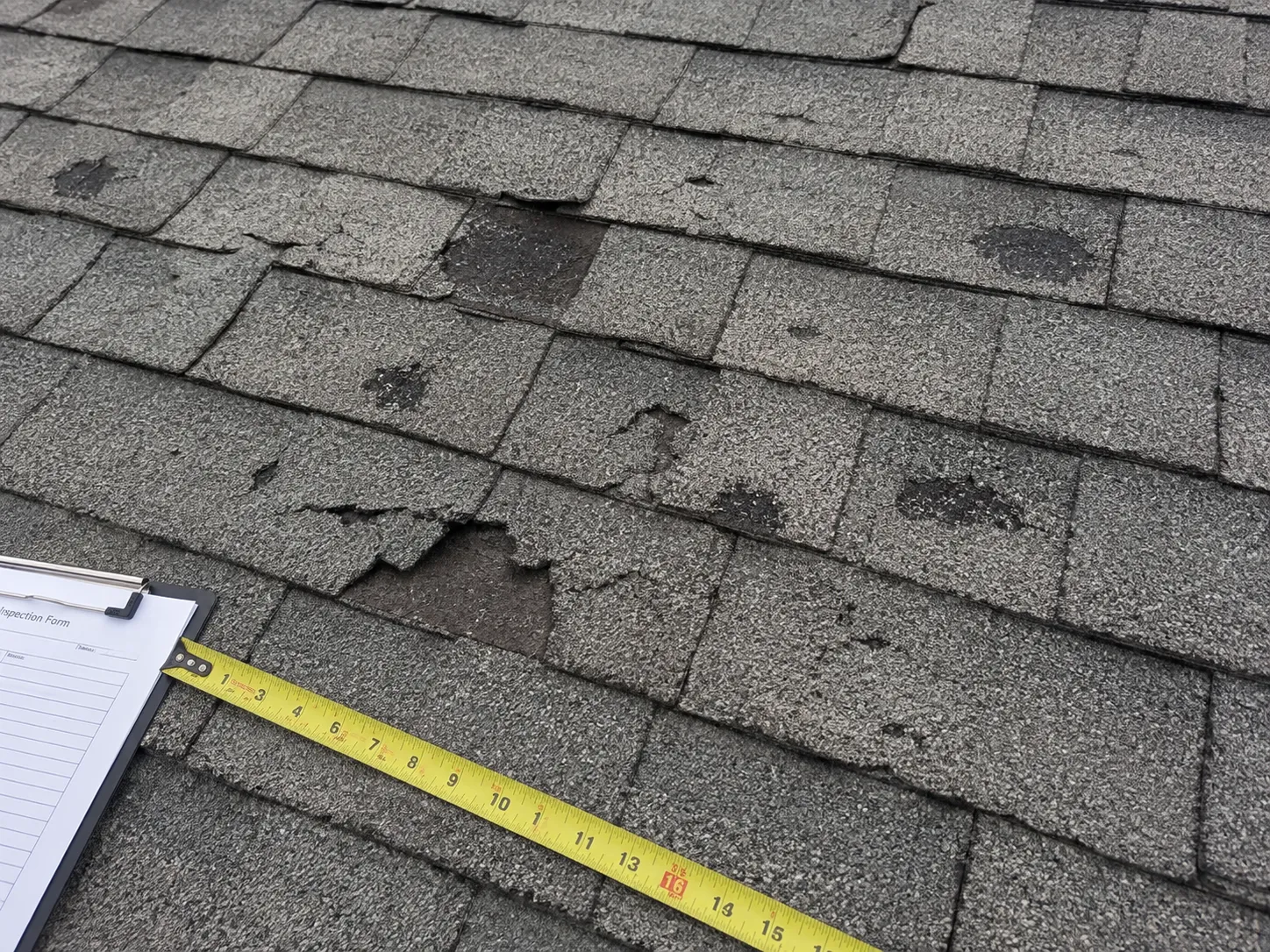 Photographing damage before cleanup begins protects your claim either way.
1. Document What Happened
Take photographs of anything you can safely observe.
That might include:
- Shingles in the yard
- Visible missing or lifted shingles
- Damaged gutters or downspouts
- Hail marks on exterior surfaces
- Fallen branches
- Water staining inside the home
- Interior leaks
- Damaged siding or vents
Do not climb onto a wet, steep, icy, or damaged roof to get better pictures.
The Wisconsin Office of the Commissioner of Insurance recommends photographing storm damage and documenting damaged property before cleanup begins.
2. Prevent Additional Damage
If the roof is actively leaking or has been opened by a branch, take reasonable steps to prevent the situation from becoming worse.
That could mean an emergency tarp or another temporary repair until permanent work can be completed.
Keep documentation and receipts for emergency work.
The goal is not to perform a rushed full repair before anyone can inspect the original damage. It is to keep rain from turning a damaged roof into damaged ceilings, insulation, flooring, drywall, and personal property.
3. Have the Damage Evaluated
A roofing inspection can help determine where the damage is, how extensive it appears to be, and whether temporary work is necessary.
If repairs are needed, Wisconsin insurance guidance recommends obtaining written bids from reliable contractors with materials and pricing documented clearly.
4. Notify Your Insurance Company Promptly
If the damage appears significant enough to involve insurance, notify your insurer or agent promptly.
Provide accurate information about when the storm occurred and what damage you have observed. Keep copies of photographs, estimates, correspondence, receipts, and other documents related to the claim.
Do not assume that ongoing conversations with an adjuster mean there is no deadline you need to worry about.
One More Wisconsin Factor: You Have a Claim Clock
Wisconsin homeowners have an unusually important deadline to understand after wind or hail damage.
Wisconsin law sets a one-year deadline to file suit involving a property insurance claim for wind, hail, or fire damage (Wis. Stat. § 631.83).
That does not mean you have one year to casually decide whether you want to report obvious storm damage. Reporting the loss promptly is still the better approach.
It means that if a dispute develops over the claim, you cannot assume months of back-and-forth negotiation with an adjuster automatically extends the legal deadline.
Negotiating does not stop the clock. Continued communication between you and the insurance company does not by itself suspend that one-year period.
Formal appraisal or arbitration can. A formal appraisal or arbitration process can pause the statutory timeline.
Do not leave storm damage undocumented. If a hailstorm hits in June and you discover possible damage, waiting until the following spring to start figuring out what happened gives you far less room to deal with any disagreement.
Wisconsin insurers are also required to acknowledge a claim within 10 days.
Most ordinary roofing claims never become legal disputes. The practical lesson is simply to deal with storm damage while the storm date, physical evidence, photographs, neighborhood damage, and other documentation are still fresh.
Be Careful With “Storm Chasers” After Major Milwaukee Storms
A major hailstorm can bring roofing companies into a neighborhood almost as quickly as it brings insurance adjusters.
Some are legitimate contractors responding to increased demand. Others are out-of-state storm chasers following severe weather from city to city.
Wisconsin law specifically prohibits residential contractors from promising to pay or rebate any portion of your insurance deductible as an incentive to sign a roofing contract, whether the offer is made directly or in an advertisement. The same law bars a contractor from representing or negotiating with your insurer on your behalf regarding a roofing claim (Wis. Stat. § 100.65). Violations carry a fine of $500 to $1,000 per occurrence. A contractor can discuss roof damage and repair costs with the insurer when you give permission, but your roofer is not your insurance adjuster.
Before hiring someone, verify that you are dealing with a legitimate contractor with a real local presence.
For work requiring residential permits, contractors must hold the appropriate Wisconsin Dwelling Contractor (DC) and Dwelling Contractor Qualifier (DCQ) credentials.
Do not let a salesperson standing on your porch convince you that you need to sign immediately because “the insurance company is paying for it anyway.”
Insurance coverage and the roofing contract are two separate things.
The Cause of Damage Matters More Than the Size of the Repair
The simplest way to think about roof insurance coverage is this:
Storm damaged a functioning roof? You may have a covered loss.
Roof reached the end of its life? That is generally your responsibility.
Only part of the roof was damaged? Insurance does not automatically owe for the entire roof.
Older roof with covered storm damage? Coverage may still apply, but your policy’s depreciation and loss-settlement provisions can have a major effect on what is paid.
Not sure what caused the problem? Have the roof inspected before assuming either that insurance will cover it or that you have to pay for everything yourself.
The roof does not have to collapse or pour water into your living room for storm damage to matter. At the same time, finding a worn shingle on an old roof does not make the roof an insurance replacement.
The goal is to identify the actual cause, document the actual damage, and make the repair or claim decision from there.
If your roof was damaged by wind, hail, a fallen limb, or another recent storm, Milwaukee Roof Contractors can inspect the damage and explain what roofing work appears to be needed. We provide roof inspection, roof repair, roof replacement, emergency roof repair, and storm and hail damage repair throughout Milwaukee, Waukesha, and Ozaukee Counties, including Wauwatosa, West Allis, Mequon, Whitefish Bay, Glendale, Shorewood, Menomonee Falls, Cedarburg, Grafton, Brookfield, New Berlin, and surrounding communities.